
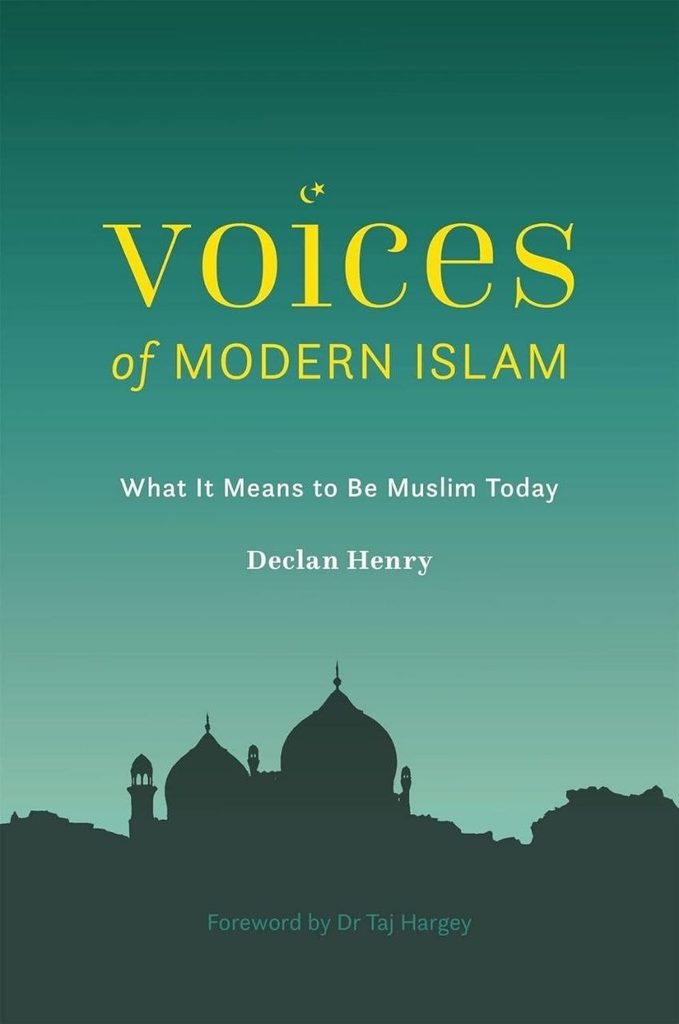
Summary : Speaking at the Hayes Khatm-e-Nubuwwat Conference at Hayes Muslim Centre in London, Irish author and researcher Declan Henry shared insights from his book Voices of Modern Islam. Based on over 100 interviews, Henry explained that Muslims view Prophet Muhammad not merely as a historical figure, but as a living moral anchor, a source of personal comfort, and an enduring ethical guide integrated into daily life.
An Irish author, researcher, and social worker, Declan Henry , recently addressed the public at the Hayes Khatm-e-Nubuwwat Conference held at the Hayes Muslim Centre in London. Addressing a diverse audience, Henry shared his unique perspective as an outsider exploring the profound reverence Muslims hold for the Prophet Muhammad.
Below is the complete transcript of his address:
“I am delighted to be here this evening to speak to you about my writing and, in particular, about my book, Voices of Modern Islam, a textbook I wrote for schools and colleges.
I would like to begin by acknowledging that I did not grow up with the emotional, cultural or spiritual connection that many of you have to the Prophet Muhammad. As an outsider, I cannot pretend to teach you anything you do not already know. Rather, you will be hearing about him from a different angle and perhaps in a nice Irish accent that you are not accustomed to hearing!
When I wrote Voices of Modern Islam, I approached the Prophet Muhammad as someone standing outside the faith, trying to understand why his presence in people’s lives remains so strong, so personal and so enduring.
What did Declan Henry learn about Prophet Muhammad while writing Voices of Modern Islam?
What I discovered while writing the book is that the Prophet Muhammad is not simply a historical figure to Muslims. He is a moral anchor, a source of comfort and an example of how to conduct oneself with dignity. Much of what I learnt came from a young imam at Gravesend Mosque in Kent, whom I visited weekly while writing the book. His eyes would light up whenever he spoke about the Prophet’s life and told me stories from the hadith, so deep was his love for him.
Across the one hundred interviews I conducted for the book, what struck me most was how consistently people described the Prophet as someone who continues to shape their everyday behaviour. They spoke about how his example influences the way they honour their families, face hardship with composure and strive to conduct themselves with dignity in all aspects of life.
I realised that the Prophet Muhammad is not distant for Muslims. He is close. He is present. He is woven into the rhythm of daily life. That closeness was something I wanted to honour in the book. I wanted to show that, even from the outside, it is possible to recognise the depth of feeling that surrounds him and to see how his example continues to guide people across cultures, generations and circumstances.
Why is reverence for the Prophet Muhammad a lived experience?
If there is one thing I hope to convey today, it is that the reverence Muslims have for the Prophet Muhammad cannot be reduced to doctrine or debate. It is lived and it is felt. It is expressed quietly in the way people speak about him and in the way they try to follow his example. I found that deeply fascinating. It is also why the second chapter of my book, The Prophet and Islam: A Brief History, exists. I would like to share some extracts from that chapter today and speak about his character, his truthfulness, his goodness and the extraordinary legacy of faith, love and humility that continues to endure.
Extracts from Voices of Modern Islam: The Prophet and Islam: A Brief History
1. A Brief History & Foundations of Mission
“Before I read from page 55, let me briefly set the scene. This section offers a short history of the Prophet’s life. It is not intended to provide exhaustive detail, but rather to help the reader understand the foundations of his mission, the world in which he lived and the qualities that shaped him from the very beginning. It provides some of the context needed to appreciate the depth of feeling Muslims have for him.”
(Read from page 55, A Brief History)
2. The Beautiful and Noble Character of the Prophet
“I would now like to turn to pages 57 and 58 and talk about The Beautiful and Noble Character of the Prophet. This part of the chapter reflects something so many people told me during my research. His character was not merely admired, but something Muslims actively sought to imitate. Here I try to convey the gentleness, strength and moral clarity that continue to inspire Muslims in their daily lives.”
(Read from pages 57 and 58, The Beautiful and Noble Character of the Prophet.)
3. The Trustworthiness of the Prophet (Al-Amin)
“Let me now read a passage about The Trustworthiness of the Prophet. This was one of the qualities people emphasised most strongly when speaking to me. They spoke about his honesty, his reliability and the confidence people placed in him long before he received revelation. It is a reminder that moral authority begins with personal integrity.“
(Read The Trustworthiness of the Prophet from page 63)
4. Exemplary Hadith Stories from Sahih al-Bukhari
I have also chosen two brief but beautiful stories about the Prophet from Sahih al-Bukhari.
(Read hadith from page 88)
I would now like to share a second story.
(Read hadith from page 85)
(Read The Trustworthiness of the Prophet from page 63)
5. The Last Sermon and Final Days
“Finally, I would like to talk about The Prophet’s Last Sermon and His Final Days. This section reflects the profound sense of loss associated with his death, but also the enduring guidance he left behind. His final words continue to shape Muslim ethics, community life and the way people understand their responsibilities towards one another.”
Frequently Asked Questions (FAQ)
What is Declan Henry’s book Voices of Modern Islam about ?
Voices of Modern Islam is an educational textbook written by Irish researcher Declan Henry for schools and colleges. Based on 100 personal interviews, it provides an outsider’s objective study of Islamic belief, culture, and the central role Prophet Muhammad plays in daily Muslim life.
Where was Declan Henry’s speech delivered?
Declan Henry delivered this address at the Hayes Khatm-e-Nubuwwat Conference, hosted at the Hayes Muslim Centre in London.
What main quality of Prophet Muhammad did Declan Henry highlight?
Declan Henry emphasized the Prophet’s personal integrity and trustworthiness (Al-Amin), noting that his moral authority began long before he received revelation and continues to inspire millions today.





Recent Comments