
written by: Sohail Bawa, Khatam-e- Nabuwwat Academy London
Another question often raised by the misled followers of the deceitful Mirza Ghulam Ahmad is this: If Prophet Isa (Jesus, peace be upon him) returns to earth as a follower of the Shariah of Prophet Muhammad ﷺ—and not as a new prophet—then how will he possess knowledge of the Shariah, the Qur’an, and divine wisdom?
According to them, this contradicts the core Muslim belief that Isa (peace be upon him) was raised to the heavens long before the commissioning (Be’sat) of Prophet Muhammad ﷺ. They further question: Will revelation of the Qur’an be sent to him again?
The Qur’anic Response:
There is no need to look elsewhere when the Quran itself provides a clear answer:
“And He will teach him the Book, the Wisdom, the Torah, and the Gospel” (3:48)
“…and [remember] when I taught you writing and wisdom and the Torah and the Gospel…” (5:110)
Allah explicitly states that He taught Prophet Isa (peace be upon him) four things:
The Book
Wisdom
Torah
Gospel
We clearly understand what the Torah and Gospel are. But what is meant by The Book and Wisdom (Kitab o Hikmah)?
The Meaning of “The Book and Wisdom”
To understand this, we turn again to the Quran:
“Our Lord, send among them a messenger from themselves who will recite to them Your verses and teach them the Book and wisdom and purify them.” (2:129)
Allah then mentions Kitab o Hikmah in reference to Prophet Muhammad ﷺ:
“Certainly, did Allah confer a great favor upon the believers when He sent among them a Messenger from themselves, reciting to them His verses, purifying them, and teaching them the Book and wisdom, although they had been before in manifest error.”
From these verses, it becomes evident that:
The Book refers to the Quran
Wisdom refers to the Sunnah of Prophet Muhammad ﷺ
Conclusion: Knowledge Granted by Allah
Based on this, it is clear that just as Allah taught Prophet Isa (peace be upon him) the Torah and the Gospel, He can grant him knowledge of the Quran and Sunnah as well. Therefore, when Isa (peace be upon him) returns, he will possess the knowledge of Kitab o Hikmah—the Quran and the Sunnah—without any need for new revelation.
Qadiani Interpretation vs. the Reality of the “Ummi” Prophet
Some Qadiani claims interpret Kitab o Hikmah as “written correspondence.” This interpretation is easily refuted.
Allah repeatedly refers to Prophet Muhammad ﷺ as “Ummi” (unlettered) in the Quran. If the Prophet ﷺ was unlettered, how could Kitab o Hikmah mean written communication? This interpretation contradicts the Quran itself.
A Critical Question for Qadiani Belief:
Now, a question arises for the followers of Mirza Ghulam Ahmad:
If you believe Mirza Ghulam Ahmad Qadiani was the returned Isa, then where did he acquire the knowledge of Kitab o Hikmah?
It is important to note that he himself denied the continuation of divine revelation after Prophet Muhammad ﷺ. He stated:
He never studied the Quran, Hadith, or Tafsir from any human teacher. (Ayam ul sulah p148, Ruhani khazain v 14, p394)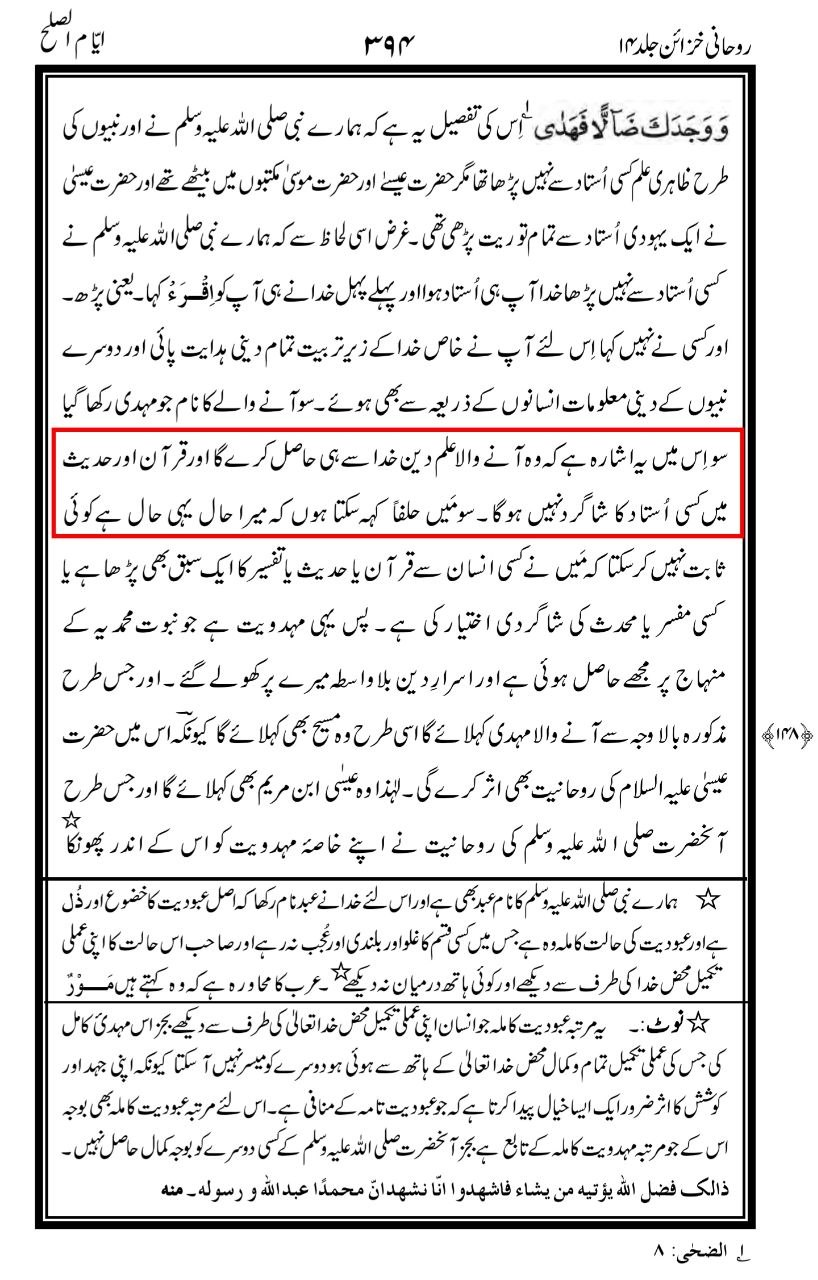
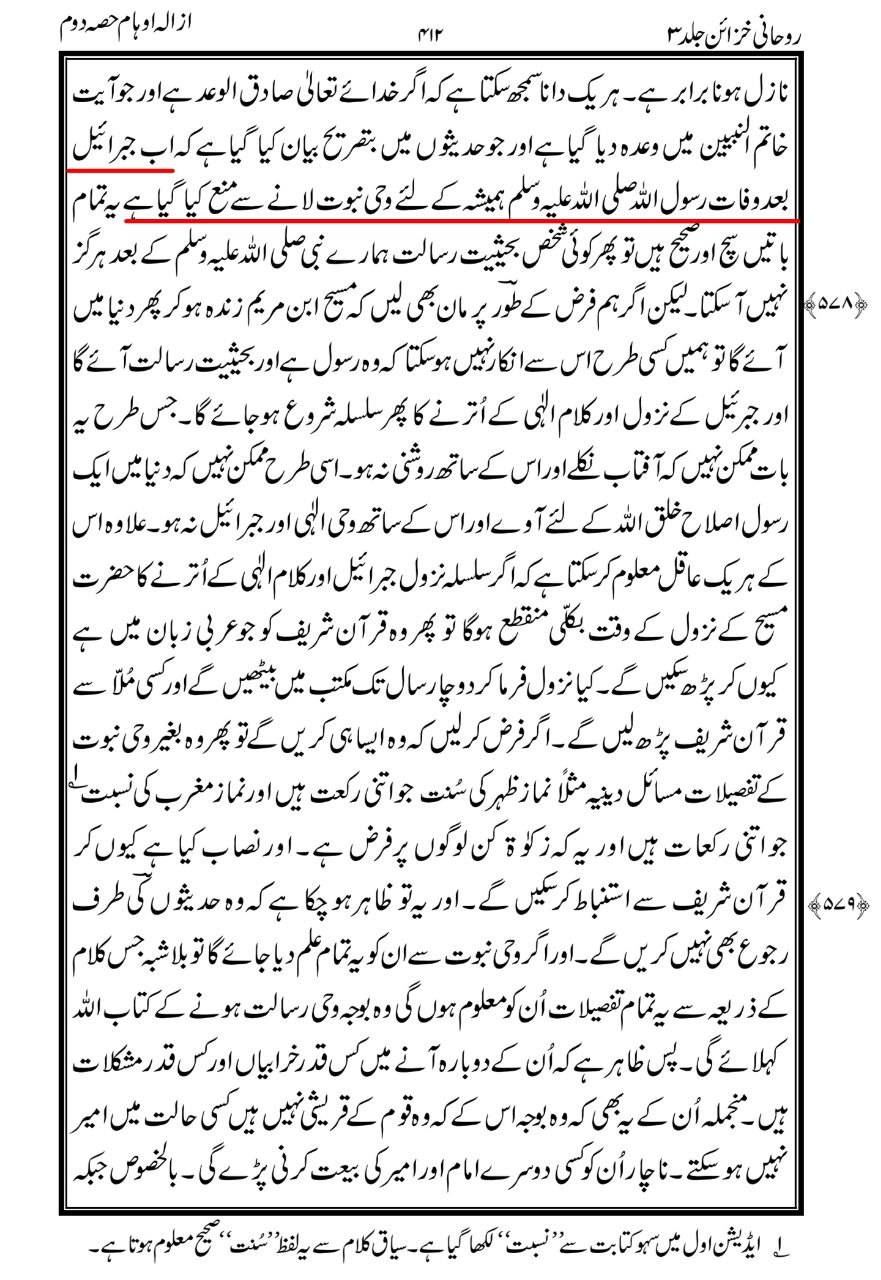
Revelation through Jibrail (Gabriel) has ceased permanently. (Azhala auhaam 2, Ruhani Khazain v3, p412)
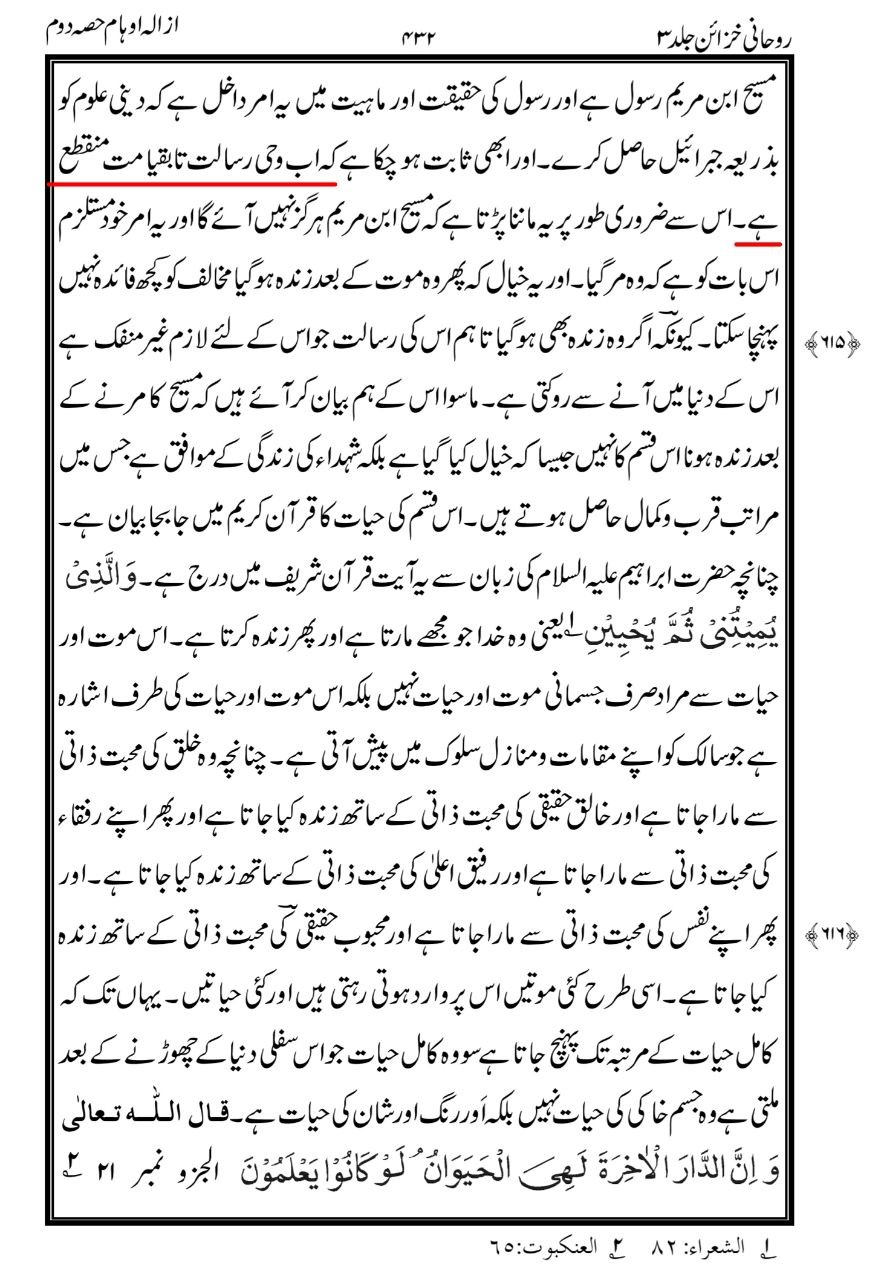
Prophetic revelation has ended until the Day of Judgment. (Azhala auhaam 2, Ruhani Khazain v3, p432)
Final Reflection
In light of these statements, it becomes impossible—according to his own claims—that Jibrail (peace be upon him) brought him the knowledge of Kitab o Hikmah.
Therefore, if the claims of being Isa (peace be upon him) were true, the question remains:
Where did this knowledge come from?
The Quran provides a clear and consistent answer, while the Qadiani claim leads to unresolved contradictions.


Recent Comments