
by Syeda
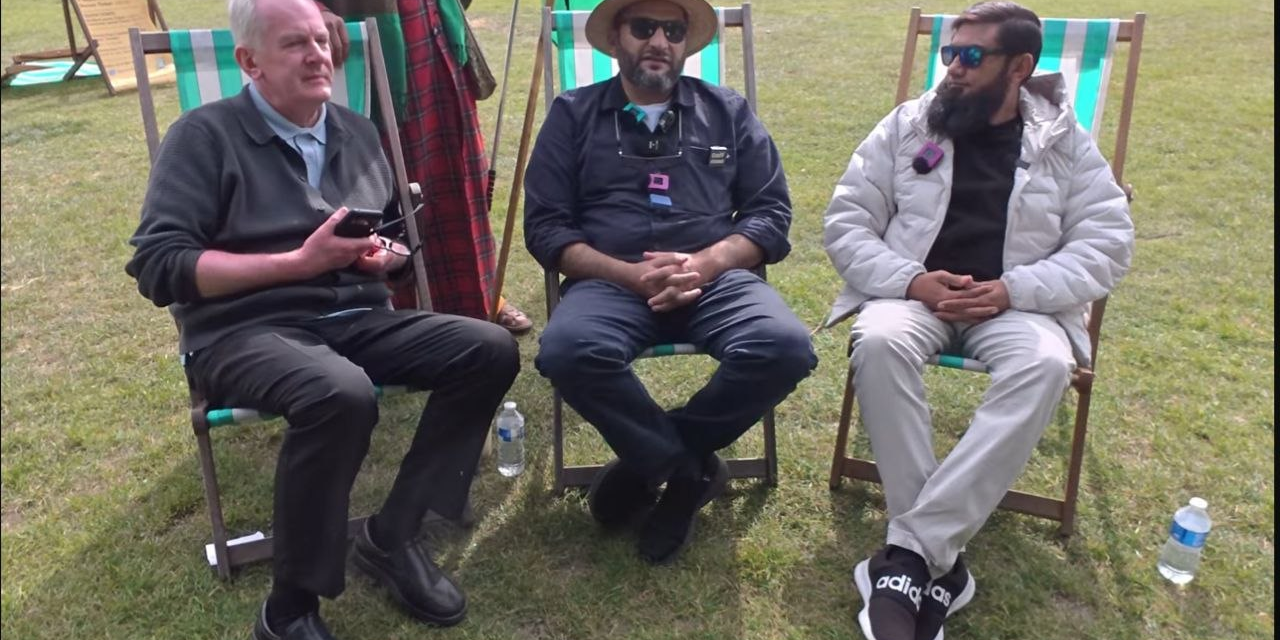
At Speakers’ Corner, a candid and wide-ranging discussion took place between a researcher and Muslim speakers engaging critically with the Ahmadiyya movement. The conversation featured Declan Henry alongside Adnan Rashid and Imtiaz Shams.
A Researcher’s Journey into the Ahmadiyya Movement
Declan Henry explained that his initial exposure to the Ahmadiyya community was largely positive. However, deeper research—especially into the writings and claims of Mirza Ghulam Ahmad—led him to reassess his views.
His upcoming book focuses not on theology, but on first-hand accounts of former Ahmadis, documenting their personal journeys, struggles, and reasons for leaving.
Giving Voice to Former Ahmadis
A central theme of the discussion was the importance of recording voices that are often ignored. Many former Ahmadis, according to the discussion, describe:
* Emotional trauma
* Social isolation after leaving
* Lack of platforms to share their experiences
The book aims to provide a space for these voices—offering both awareness and support for others in similar situations.
Debate, Dialogue, and an Upcoming Confrontation
The speakers emphasized that their goal is not hostility but open, direct engagement. They highlighted an upcoming face-to-face debate scheduled for April 29, 2026, in London, where core theological issues between mainstream Muslims and the Ahmadiyya community are expected to be discussed publicly.
The intention is clear:
present evidence openly and let people decide where the truth lies.
Key Points of Criticism Raised
- Inflated Numerical Claims
It was pointed out that the Ahmadiyya leadership has historically claimed membership figures reaching around 200 million globally. However, based on census data, independent estimates, and insider accounts discussed in the conversation, critics argue that the actual global number may be closer to under 1 million—and possibly even a few hundred thousand.
This stark contrast was described as a serious credibility issue. - Specific Theological Issues About Jesus (peace be upon him) and Mary (peace be upon her)
Speakers did not speak in general terms—they raised specific and serious concerns about statements attributed to Mirza Ghulam Ahmad Qadiani, including:
* Denial of the miraculous birth of Jesus (peace be upon him), claiming it was a natural birth
* Rejection of miracles such as Jesus (peace be upon him) speaking in the cradle
* Statements described as deeply disrespectful and offensive regarding Mary (peace be upon her)
* Claims that reinterpret or undermine the Quranic narrative about both Jesus (peace be upon him) and his mother
These were presented as clear departures from established Islamic belief, not merely differences of interpretation. - Selective Debate Framing
A major criticism was that Ahmadi representatives avoid referencing their own founder’s writings during debates.
According to the speakers:
* They insist discussions remain limited to the Qur’an and Hadith
* They do not allow quotations from the books of Mirza Ghulam Ahmad
* This prevents scrutiny of the very claims that define their movement
The speakers argued that this is equivalent to discussing a religion while excluding its founder’s teachings, which undermines meaningful dialogue. - Unfulfilled Universal Claims
Mirza Ghulam Ahmad Qadiani is said to have claimed to be:
* The Messiah in Islam and Christianity
* A figure connected to Hindu, Buddhist, and other religious traditions
Critics questioned:
If these universal claims are central, why have they not been consistently presented to followers of those religions—even until today?
A Question of Identity
One of the most direct conclusions from the discussion was this:
If the Ahmadiyya movement presented itself as a separate religion, much of the conflict would not exist.
The core issue, according to the speakers, is:
* Claiming to represent Islam
* While holding beliefs that contradict foundational Islamic teachings
Conclusion: Dialogue, Not Silence
Despite strong criticism, the speakers emphasized:
* Rejection of violence and persecution
* Commitment to debate over hostility
* Willingness to engage openly with evidence
The upcoming debate on April 29, 2026, is seen as a critical moment—one that could bring long-standing disagreements into direct and transparent discussion.
At its heart, this conversation was not just theological. It was about:
* Truth claims
* Accountability
* And the voices of those often left unheard
For further details follow the link below
https://youtu.be/SId5ija-1Jo?si=H1VwQS9ozQMBmX4s




Recent Comments